Spiritual direction with Ben Kraker
What to expect
A little more about the practice, our time together, and how to begin.
Slow attention. Honest noticing.
What is spiritual direction?
Spiritual direction is a contemplative, one-on-one practice of paying attention to your life and to God's presence within it. Together, we slow down, listen carefully, and make room for what may be emerging.
You might bring a question, a relationship, a change, a moment of joy, or something you cannot quite put into words. Conversation, reflection, and silence can all be part of our time together.
My role is to accompany you: to listen, ask honest questions, and help you notice. Spiritual direction does not replace counseling or therapy, and there is no agenda for you to achieve.
You don't have to lead, solve, or perform here.
I am especially drawn to accompanying people who carry responsibility, including leaders, pastors, founders, caregivers, and others who rarely have a space where someone else is attending to them.
You are also welcome if you are navigating doubt, changes in faith, or questions about belonging. This practice is rooted in the Christian contemplative tradition, but you do not need to identify as religious to begin a conversation.
Beginning together
How we begin
A first conversation
The first session is at no cost. It is a time for us to get to know each other and discern together whether this is a good fit.
Space for your actual life
Sessions are 60 minutes. You do not need to prepare an agenda or know exactly what you want to say.
In person or virtually
I am based in southeast Grand Rapids, Michigan. We can meet virtually, in my home, or occasionally over breakfast at a local restaurant.
An ongoing rhythm
If we continue, we will find a rhythm that works for us, usually meeting once or twice a month. We will talk during our first conversation about which arrangement below best fits what you are seeking and what is sustainable for you.
An arrangement that fits your life
I usually offer ongoing direction through a $200 monthly arrangement, with either of the options below. This is the shape I prefer as a starting point. I am open to adjustments in frequency, between-session contact, or cost when your circumstances call for something different.
Our first conversation is at no cost. We will agree on an arrangement together before beginning ongoing direction.
What contact between sessions looks like
A contact point is a focused exchange around one question, experience, or moment of discernment. A phone conversation may last up to 10 minutes. Text and email exchanges stay with one topic rather than becoming an ongoing conversation.
You may send a message whenever something significant surfaces. I respond within 24 hours.
Between-session contact is for spiritual reflection and discernment. It is not crisis or emergency support.
Confidentiality and meeting spaces
Your story deserves care and discretion. I hold our conversations in confidence and take care to protect your privacy.
An occasional breakfast can be a welcoming way to get acquainted or explore whether spiritual direction feels right for you. When our conversations call for more depth or privacy, we will meet in a private setting. Café meetings are usually a starting point rather than the setting for ongoing direction.
The story beneath Seen Chair
Hagar, and the God who sees.
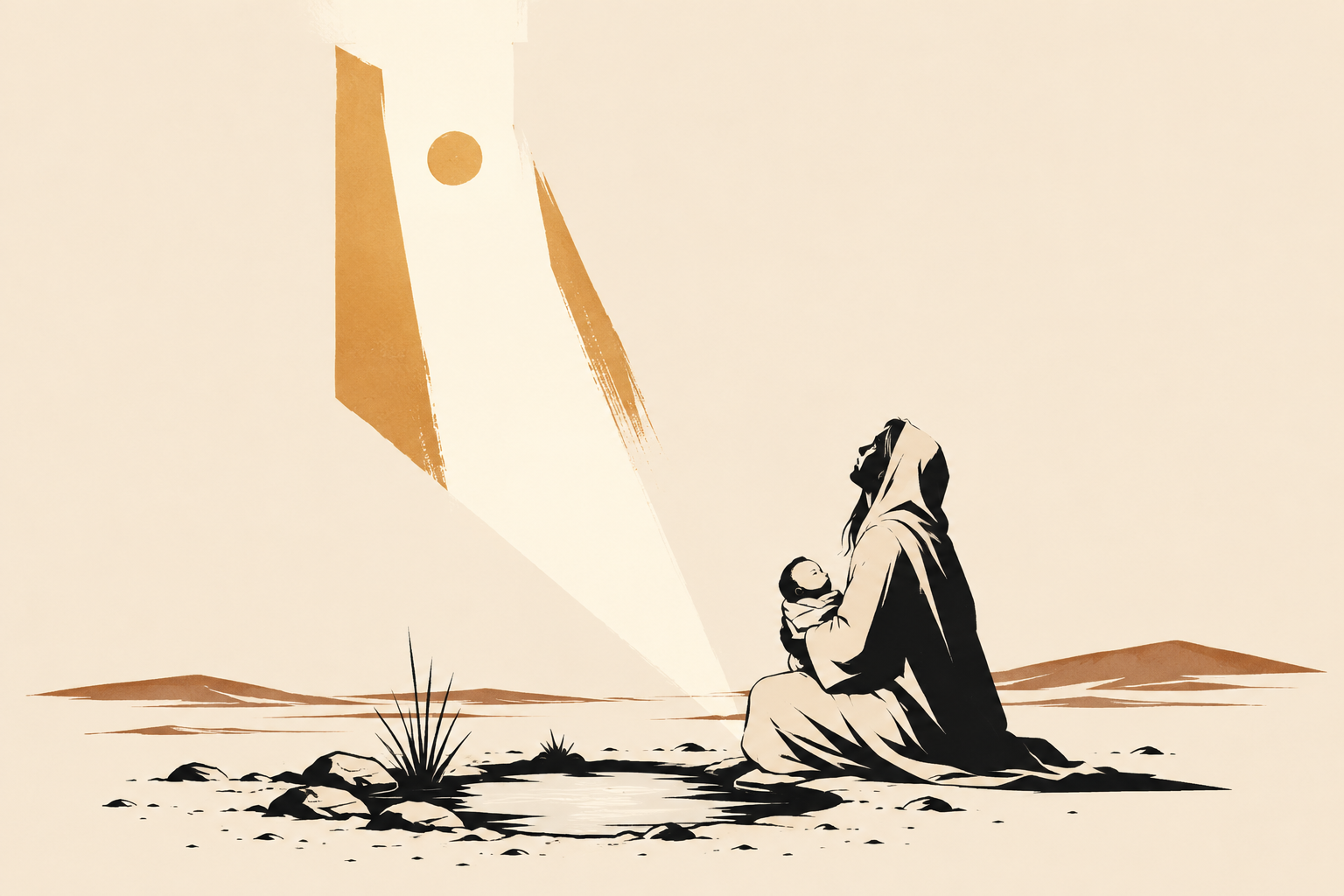
Hagar's story asks more of us than a comforting reminder that God notices everyone. She is an enslaved Egyptian woman in the household of Abraham and Sarah. Her body is drawn into their plans for a child, and she suffers mistreatment within the very household associated with God's promise. The people at the center of the religious story are capable of harming someone in their care.
In her first wilderness encounter, God meets Hagar by name. She is asked where she has come from and where she is going. She speaks, and she names the One who has met her: El Roi, the God who sees me. A woman treated as a means to someone else's future becomes a witness with a voice of her own.
Later, cast out with her son Ishmael, she faces another wilderness and fears losing him. God hears the boy, speaks to Hagar, and opens her eyes to water. These are distinct encounters within a larger story of vulnerability, survival, and care. Being seen and being heard matter where people have been used, dismissed, or left beyond the circle of belonging.
There are difficult parts of this story, including the instruction for Hagar to return to the household where she has suffered. I do not want to smooth those tensions away, excuse the harm, or turn her survival into advice to remain in a harmful situation. Encountering God does not make what happened to her acceptable. Her story leaves room for grief, questions, and the work of finding life beyond what others have decided she is worth.
What this means for our time together
In my own writing and formation, Hagar has helped me recognize God as the One who sees, including when God's own people have failed to see. That shapes the kind of attention I hope to offer here. Your experience deserves to be heard before it is explained. You do not have to protect a religious institution's reputation, make your pain into a lesson, or arrive at a reassuring conclusion.
My theology comes with me into the room, but my role is not to press you into my shape. It is to make space for you to attend to God in your own life. We can notice together which voices bring freedom and which carry demands that may not belong to God. We can stay with an unanswered question, make room for silence, and resist rushing to name what an experience means.
Listening more than teaching. Noticing more than correcting. Making room for the God who restores, shepherds, and sees.
Begin with a first conversation.
Our first session is at no cost. We will discern together whether this is a good fit.
Book a first conversation